

Finding the Best Direction for Balcony Solar Panels to Capture More Sunlight
Why the Way Your Balcony Faces Can Change Solar Performance
The direction of a balcony can quietly determine whether a small solar setup performs impressively or only reaches part of its potential. Even before equipment is chosen, it helps to notice when sunlight actually reaches the outdoor space and how long it stays there. In many parts of the Northern Hemisphere, south-facing balconies tend to receive strong exposure across a large portion of the day, while east- and west-facing spaces often get their best light in the morning or afternoon. For apartment residents considering balcony solar panels, understanding this pattern can make installation decisions much easier. A few hours spent observing the sun can reveal far more than simply assuming that a bright balcony is automatically ideal for solar power.
Orientation matters because solar production changes as the sun moves across the sky. An east-facing balcony may begin generating useful electricity earlier in the day, which can suit households that consume more power in the morning. A west-facing balcony, on the other hand, may receive stronger afternoon sunlight when people return home and begin using appliances. South-facing locations can provide a broader production window where exposure is unobstructed. There is no single perfect direction for every apartment, since local surroundings, latitude, building design, and personal electricity habits can all change what works best.
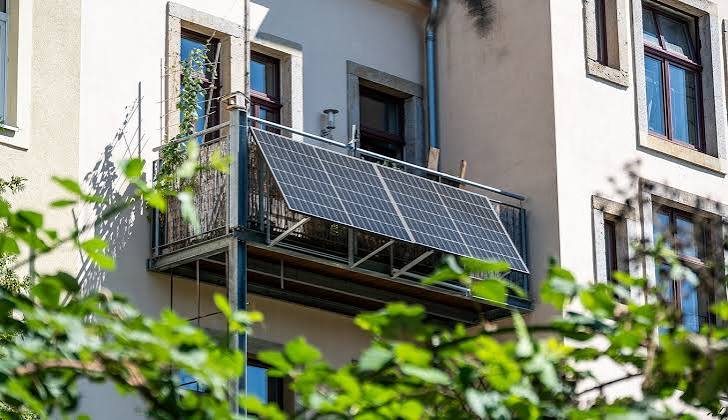
The balcony itself can also interfere with an otherwise promising direction. Deep overhangs, thick railings, privacy screens, neighboring balconies, and nearby buildings can create shadows that shift hour by hour. A panel positioned in direct sunlight at noon might be shaded for much of the morning, or the opposite could happen later in the day. Trees introduce another variable because leaves can block more sunlight during certain seasons. Watching these changes over several days gives a more realistic picture. It is often useful to think about the entire path of the sun rather than judging the space from one particularly bright moment.
Panel angle adds another layer to the decision. Sunlight reaches the earth at changing angles throughout the year, so a panel’s tilt can influence how effectively it captures available light. A completely vertical installation may be convenient on a balcony railing, but another safe angle could provide better exposure depending on the location and season. Winter sun often sits lower in the sky, while summer sunlight arrives from a higher position. Adjustable mounting can sometimes provide flexibility, although security, wind resistance, building requirements, and safe installation should always come before chasing a small increase in output.
A strong solar setup usually begins with careful observation rather than guesswork. Check which direction the balcony faces, follow changing shadows, notice seasonal differences, and consider how railing design affects exposure before settling on a permanent position. The goal is not simply to find the brightest-looking corner, but to identify where useful sunlight remains available for the longest practical period. When balcony solar panels are positioned with orientation, shade, tilt, and safety all in mind, a modest outdoor area can become a far more productive source of household energy. That thoughtful planning can help residents get better value from the space they already have.
…